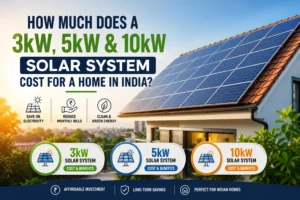
Rooftop Solar vs Traditional Electricity: 10-Year Cost Comparison & ROI Analysis

Most importantly, your electricity bill won’t remain static. Annually, Indian homeowners incur escalating energy costs owing to increasing power rates, escalating fuel costs, and increased energy consumption by households. Today, the consumption of electricity for various purposes such as air conditioners, refrigerators, electric cars, remote working devices, among other items, has seen homes use up a lot of electricity.

One question homeowners keep asking themselves is whether rooftop solar energy is more economical than relying solely on grid electricity.

The truth is that solar energy helps one slash monthly energy bills but most of the time the initial cost of installing solar energy systems deters homeowners from adopting solar energy. However, one thing is certain – solar energy isn’t just environmentally sustainable but a financially viable decision as well.

In this blog, we provide a side-by-side comparison of rooftop solar and electricity for a decade.

Is Rooftop Solar Worth It Financially?

In India, rooftop solar panels usually pay for themselves within four to six years. Within a decade, the cost of electricity is much lower than what it would be with dependence only on grid power, particularly because of subsidies and net metering.

The low cost of electricity, combined with subsidies and energy generation, make rooftop solar panels an incredibly valuable investment for homeowners.

Understanding Solar ROI

The Solar ROI is an acronym for “Return on Investment” of solar systems. ROI is the measure of profit made through investments divided by the initial cost and then multiplied by 100%. Thus, the larger the ROI, the more profitable the solar installation is.

What Is Solar ROI?

The Solar Return on Investment allows homeowners to estimate if investing in solar energy pays off. Essentially, it compares: the money spent on buying and setting up the solar system, electricity savings achieved, and costs of owning the solar system.

How Solar ROI Is Calculated

Formula: Solar ROI = Savings – Cost. Variables like subsidies, maintenance cost, electricity rates, and power generation play a significant role in the final calculation.

Key Factors Affecting Returns

Rooftop Solar vs Traditional Electricity – The Core Difference

Whereas electricity through the traditional means demands regular payment on a monthly basis for use, rooftop solar electricity demands an initial investment which will reduce electricity bills for the future.

FactorRooftop SolarTraditional Electricity
Initial CostHigherNone
Monthly BillsLowerContinuous
Price Inflation ImpactLowHigh
Energy IndependenceHighNone
Long Term SavingsHighLimited
Environmental ImpactPositiveHigher Carbon Impact

Although traditional electricity seems to be a more cost-effective option because it comes at zero installation cost, electricity bills will keep piling up over time. Solar energy is not the same.

Assumptions Used in This 10-Year Cost Comparison

Comparisons based on finance are predicated on certain assumptions about system size, power usage, tariffs, subsidies, and production of power.

VariableAssumption
Solar System Size5kW
Installation CostINR 3,00,000
Subsidy BenefitINR 78,000
Net Cost After SubsidyINR 2,22,000
Electricity TariffINR 8/kWh
Annual Tariff Increase6%
Monthly Consumption600 Units
Solar Lifespan25+ Years

Cost of Traditional Electricity Over 10 Years

Average Monthly Electricity Costs

Considering consumption per month at 600 units and average tariff of ₹8 per unit: Monthly electricity bill: 600 × ₹8 = ₹4,800. Annual electricity cost: ₹4,800 × 12 = ₹57,600.

Annual Increases in Tariffs

Over the years, it has been observed that tariffs for electricity keep increasing due to factors such as costs of fuel, infrastructure developments, changes in regulations, and increasing demand. Suppose that there is a conservative increase of 6% in tariff per year.

YearAnnual Electricity Cost
Year 1INR 57,600
Year 2INR 61,056
Year 3INR 64,719
Year 4INR 72,716
Year 5INR 92,297

Cumulative Cost Analysis

During a period of 10 years, the household ends up paying for electricity charges alone about Rs 7-8 lakh. Even after paying all of this money, one does not have an ownership item or an advantage of energy production in the future.

Cost of Rooftop Solar Over 10 Years

Although rooftop solar systems involve initial costs, the total cost of ownership for 10 years can sometimes prove less expensive than buying power from the utility company over the same period.

Initial Installation Cost

In this comparison, let us consider a residential solar panel system of 5kW capacity. Cost for installation: ₹3,00,000. Includes: solar panels, inverter, frame, cabling, safety devices, and installation charges.

Government Subsidy Impact

ItemAmount
Installation CostINR 3,00,000
Subsidy BenefitsINR 78,000
Net CostINR 2,22,000

Maintenance Expenses

Solar power plants need little maintenance. Maintenance cost for 10 years: ₹15,000-₹25,000. As compared to the cost of electricity over the long run, maintenance costs are minimal.

Inverter Replacement Costs

Though solar panels have a lifespan exceeding 25 years, the inverter might need replacement during its usage time period. Inverter replacement cost: Rs. 30,000 to Rs. 50,000. This would happen just once during the entire period of ownership.

Net Metering Benefits

Through net metering, owners can send additional energy back to the grid. Advantages: more bill credits, greater use of solar power generation, and greater ROI.

Estimated 10-Year Ownership Cost

Cost ComponentEstimated Cost
Solar InstallationINR 3,00,000
Less SubsidyINR 78,000
MaintenanceINR 20,000
Inverter ReserveINR 40,000
Total Ownership CostINR 2.8 to INR 3.0 Lakh

10-Year Cost Comparison: Solar vs Traditional Electricity

A system installed on your roof will cost you much less over a decade compared to the conventional supply of electricity through the grid.

YearTraditional Electricity CostRooftop Solar CostSavings
Year 1INR 57,600INR 2,22,000-INR 1,64,400
Year 2INR 61,056MinimalGrowing
Year 3INR 64,719MinimalGrowing
Year 5INR 72,716MaintenanceSignificant
Year 10INR 97,297Low Ownership CostVery High

Total 10-Year Outcome

CategoryTraditional ElectricityRooftop Solar
Total CostINR 7-8 LakhINR 2.8-3 Lakh
Asset OwnershipNoYes
Future SavingsNoYes
Energy IndependenceNoYes

In this scenario, rooftop solar can save approximately ₹4-5 lakh or more in 10 years. And it keeps generating power for a further 15+ years.

What Makes the Cost Difference Grow Even Wider?

Conventional electricity gets more costly annually due to increasing tariffs. But with solar:

Solar Payback Period Explained

The Solar Payback Period is the duration within which electricity savings will cover the costs incurred from installation.

Payback Period by System Size

System SizeTypical Payback Period
3kW4-6 Years
5kW4-5 Years
10kW3-5 Years

Factors That Improve Solar ROI

Real-Life Example: 5kW Solar ROI Calculation

MetricValue
Monthly Electricity Bill BeforeINR 5,000
Installation CostINR 3,00,000
Subsidy ReceivedINR 78,000
Net InvestmentINR 2,22,000
Annual SavingsINR 55,000 to INR 65,000
Payback Period4-5 Years
10-year SavingsINR 4-5 Lakh+

Even a well-designed 5kW solar power plant can help you save roughly ₹4-5 lakhs or even more during a span of 10 years based on various factors such as electricity costs and net metering benefits.

Beyond Financial Savings: Additional Benefits of Solar

Energy Independence

Low Carbon Footprint

Increased Property Value

Protection Against Future Tariff Hikes

The prices for electricity usually rise with time. Solar energy will help protect homeowners against rising prices because they will be able to generate their own electricity.

When Solar May Not Be the Best Option

Is Rooftop Solar Worth It for Your Home?

Monthly Electricity BillSolar Recommendation
Under INR 1,500Consider Carefully
INR 2,000 to INR 5,000Strong Candidate
INR 5,000+Highly Recommended

Why Choose Brightleaf Energy for Maximum Solar ROI?

Frequently Asked Questions (FAQs)

What is solar ROI?

Solar Return on Investment is used for calculating the amount of money earned from the use of a solar system. It helps homeowners analyze the profitability of installing the system in their homes.

Is rooftop solar cheaper than electricity in the long run?

Yes. While it entails an initial cost to install rooftop solar, it ends up being more economical since it results in lower energy bills for years.

How much can solar panels save over 10 years?

Depending on the system’s size, electrical consumption, taxes, and incentives, most homeowners enjoy savings worth ₹4-8 lakhs or even more after 10 years.

What is the average payback period for solar panels?

The average payback period of most residential rooftop solar systems is around 4-6 years.

Does net metering improve solar ROI?

Yes, net metering is helpful in saving money because homeowners get credits for the electricity that has been sent back to the grid.

What factors affect solar return on investment?

Key factors include: tariffs on electricity, size of system, subsidies from government, net metering, consumption of energy, and panel efficiency.

How long do solar panels last?

Modern solar panels have an effective life expectancy of at least 25 years.

Do solar panels make sense for houses that have low electricity costs?

Yes, but the payoff period is likely to be longer. Houses that consume moderate to high amounts of electricity will have better ROIs.

Will government subsidies help increase the ROI?

Yes. Government subsidies bring down the cost of installation and increase overall returns on investments.

Can solar energy entirely get rid of my electricity bill?

Sometimes, but it depends on several factors.

Conclusion

In the span of 10 years, it is evident that rooftop solar power outshines conventional electricity financially. Although there will be an initial expenditure, in light of the government’s subsidies, net metering advantages, along with electricity generation over time, it is possible to recoup costs within a couple of years and benefit in terms of savings for years to come.

Solar power is no longer an environmental choice for many homes in India, but rather a sound financial investment due to increasing rates of electricity, modern advancements in technology, and the availability of subsidy schemes.

With good planning and proper installation, rooftop solar has the potential to provide a great return on investment, reduced electricity expenses, more energy independence, and much more.

About Us

Brightleaf offers reliable, affordable solar solutions with expert installation and maintenance for homes, societies, and businesses—ensuring sustainable energy efficiency.