
PM Solar Scheme 2026: Eligibility, Benefits, Subsidy & Application Process (Complete Guide)
- Home
- Home 1
- Blog Standard
- Blog
- PM Solar Scheme 2026: Eligibility, Benefits, Subsidy & Application Process (Complete Guide)
PM Solar Scheme 2026: Eligibility, Benefits, Subsidy & Application Process
PM Solar Scheme : In recent years, electricity bills have increased dramatically across the nation. As a result, more individuals are becoming concerned about investing in energy-efficient alternatives that will help save on monthly utility costs in the long run. The Indian government is taking steps to encourage the adoption of renewable energy sources by launching various campaigns to minimize the use of traditional energy sources.
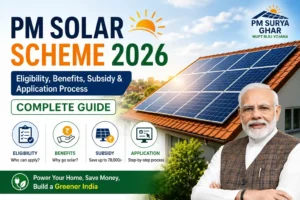
The current PM Solar Scheme, also referred to as PM Surya Ghar Muft Bijli Yojana, was developed specifically to promote green energy use among residential consumers. The government provides financial support to homeowners who install rooftop solar panels under this program. Subsidies of up to ₹78,000 can be obtained to cover the initial expenses associated with implementing a solar energy system.
The main goal of this campaign is to facilitate solar energy implementation by about 1 crore households throughout the country. Whether you are thinking of installing solar power at home or want to gather information about current subsidy options, this article will address all of your questions related to the process and benefits.
What is the PM Solar Scheme 2026?
The PM Surya Ghar Muft Bijli Yojana, also referred to as the PM Solar Scheme 2026, is a program offered by the Government of India that offers assistance with funds for installation of solar panels. The households that qualify can benefit from receiving subsidies of ₹78,000 in addition to cutting their utility bills through the use of solar panels.
The aim of the PM Surya Ghar Muft Bijli Yojana was to make it easier and affordable for household owners to invest in solar panels. Even though the solar technology has been popular over the past few years owing to the benefits associated with reduced expenditure in the future, it is the high initial cost of installation that prevents people from opting for solar.
This government rooftop solar scheme was developed as an effort by the Indian government to overcome the problem mentioned above and encourage the use of renewable sources of energy. Apart from ensuring that citizens benefit from reduced utility bills, the scheme also contributes to making India more energy efficient in the long term.
Key Objectives of PM Surya Ghar Yojana
Household Savings from Lower Electricity Bills
The main aim of this scheme is to assist individuals in reducing the cost of their electricity bills. This is achieved by utilizing solar energy generated from rooftop solar panels.
Solar Power Use in India
This scheme will go a long way in promoting the use of solar energy for power generation in India.
Greater Energy Independence
By generating electricity in your home, one will be more independent and not be dependent on other energy sources.
Achieving Clean Energy Targets in India
With clean energy targets set for India, it is imperative that residential solar be used in order to achieve these.
Increasing Adoption of Rooftop Solar Panels in India
Subsidies have been planned to encourage the adoption of solar rooftops across India.
PM Solar Scheme 2026 Benefits
The PM Surya Ghar Yojana offers subsidy support, lower electricity bills, net metering benefits, long-term savings, and access to clean energy.
Subsidy Up to ₹78,000
The foremost advantage of this plan is the financial help offered to eligible homeowners. This will ensure that there is minimum expenditure required to install rooftop solar panels.
Generate 300 or More Units of Electricity Every Month
Based on the size of the system and other local considerations, a considerable amount of electricity needs of the home could be generated using rooftop solar.
Reduced Monthly Utility Expenses
When the solar panels produce electricity in the daytime, the homeowner uses less electricity supplied from the national grid and saves money in the process.
Make Money With Net Metering Option
Under net metering, a homeowner can export any extra electricity produced using the solar system back to the grid. This earns them a credit that offsets electricity expenses.
Cost Savings for More Than 25 Years
The latest technology used in the manufacturing of solar panels ensures their efficiency for at least 25 years or more. After recovering the initial costs, homeowners get inexpensive electricity for many years.
Green and Eco-Friendly Electricity Supply
Solar energy production also helps minimize carbon emissions.
PM Solar Scheme Eligibility Criteria
Indian residents who possess a residential property along with a suitable rooftop and an electricity connection are eligible for PM Solar Scheme.
- Residential Property Requirement: Residents applying must be owners of their residential property.
- Electricity Connection Requirement: Validity of electricity connection is a prerequisite for scheme eligibility.
- Conditions for Suitable Rooftop: Suitable rooftop implies sufficient space and structure for the installation of solar panels. Other conditions like shading, orientation of rooftop are considered.
- Requirements Based on Income Categories: Presently, there are no strict income limitations for scheme eligibility. However, eligibility depends on relevant government policies.
Those Not Eligible for the Scheme:
- Commercial institutions
- Those not having an electricity connection
- Properties not having suitable rooftops
- Certain applicants having enjoyed similar benefits of subsidy
PM Solar Scheme Subsidy Structure 2026
One of the most searched questions related to the PM Solar Scheme is: How much subsidy is available? The answer will depend on the capacity of the solar system installed.
1kW Solar Subsidy
Homeowners that opt for installing a 1kW solar panel on their rooftop get a subsidy of ₹30,000.
2kW Solar Subsidy
2kW rooftop solar panel installation attracts the subsidy worth ₹60,000 and works best for those with average electrical consumption.
3kW Solar Subsidy
Installation of a 3kW solar rooftop system receives the maximum subsidy limit of ₹78,000 and is one of the most preferred choices among residents.
Solar Subsidy Over 3kW
As you go beyond the limit of 3kW, the power produced increases but the subsidy limit does not exceed ₹78,000.
Documents Required for PM Solar Scheme Application
One must have all required documents ready before initiating the process of applying for a solar scheme to save themselves from any problems.
- Aadhaar Card: The Aadhaar Card acts as the basic identity document that must be provided by the applicants. All details entered while registering should correspond to the Aadhaar records.
- Electricity Bill: A current electricity bill is needed to provide evidence of the consumer number, electricity connection, and DISCOM related to the property.
- Proof of Property Ownership: Applicants must submit proof of ownership of the residential property at which the solar power generation plant shall be established.
- Bank Account Details: Considering the fact that subsidies shall be paid via Direct Benefit Transfer (DBT), it is necessary to give correct details.
- Mobile Number and E-Mail ID: It is important to have a valid mobile number and email ID for one-time password (OTP) verification and for tracking progress.
- Cancelled Cheque: A cancelled cheque may be asked for in order to confirm bank account details.
How to Apply for PM Solar Scheme 2026 (Step-by-Step)
Application Process Through Online Mode: One can register in the official portal of PM Surya Ghar, obtain feasibility approval, select an approved vendor, get solar installation done, and submit subsidy claims after the final inspection.
Step 1: Registration in Official Portal
Register on the official portal of PM Surya Ghar using details related to your state, DISCOM and electricity consumer number.
Step 2: Enter DISCOM Details
Enter the name of the DISCOM which supplies power in your area.
Step 3: Enter Consumer Number
Insert the electricity consumer number precisely as mentioned in your bill.
Step 4: Rooftop Feasibility Approval
Check whether your rooftop is eligible for solar installation from the concerned DISCOM.
Step 5: Selection of Approved Vendor
Choose a solar installation company approved by the government.
Step 6: Installation of Solar Power System
Installation will be done after approval as per the guidelines specified.
Step 7: Inspection of Solar Installation with Net Metering
The system will undergo inspection and net metering post installation.
Step 8: Subsidy Claim Submission
Submit documents and apply for subsidy claim from the official website.
Step 9: Direct Bank Transfer (DBT)
Disbursal of subsidy directly into the beneficiary’s bank account.
How Long Does It Take to Get Solar Subsidy?
Homeowners often wonder when to expect subsidies for their rooftops once their solar system is installed.
Time to Approval: The initial application and the feasibility assessment of their roof can take a few days or a couple of weeks depending on the DISCOM and workload.
Installation Period: The installation period depends on the size of the solar system and its site conditions. The installation period is usually not long after the assessment is done.
Net Meter Approval Time: The time taken for the net metering approval is not uniform across all states and electricity distribution companies.
Subsidy Credit Time: Once the successful assessment and verification are conducted, the amount is directly credited to the account of the recipient.
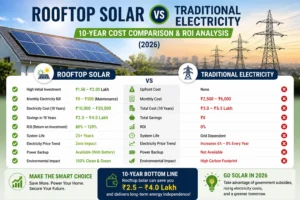
PM Solar Scheme vs Traditional Electricity Consumption
What is the PM Solar Scheme 2026?
One of the biggest advantages of rooftop solar is the ability to reduce long-term electricity expenses while generating clean energy.
In contrast to regular power, where there will be ongoing costs incurred each month, rooftop solar ensures long-term cost savings after recovering the initial installation costs.
Who Are Eligible for Applying to the PM Solar Scheme?
The scheme is applicable to many consumers who seek to save on electricity costs, as well as gain government assistance.
Owners of Independent Houses
Consumers with independent rooftops will find it easy to install solar equipment.
Villa Owners
Solar systems usually suit villa residents since they usually possess more roof areas and use much electricity.
High Electricity Consumers
Those consuming large amounts of electricity usually realize their investment in solar power more quickly.
Rural Homeowners
The program aims to help rural homeowners who want cheap and reliable sources of energy.
Semi-Urban Homeowners
Semi-urban homeowners in tier-2 and tier-3 cities are increasingly using rooftop solar power because of increased electricity bills.
Housing Societies
In some instances, the housing society members may consider using solar power to meet their electricity needs.
Common Mistakes to Avoid While Applying
Preventing these errors can contribute to quicker approval and subsidy processing.
- Selecting Unapproved Solar Dealers: Only deal with approved solar dealers to qualify for subsidies.
- Submitting Invalid Documents: Make sure all uploaded documents are accurate and clear.
- Disregarding Rooftop Suitability: An assessment should be done before installation.
- Invalid Bank Details: It might cause unnecessary delays in subsidy payment.
- Delays in Approving Net Metering: Completing the net metering process in time can prevent such delays.
Latest Updates on PM Solar Scheme 2026
The PM Surya Ghar Muft Bijli Yojana is gaining momentum in India. Some of the recent developments are:
- Subsidy up to ₹78,000 still being provided by the government.
- Digitalization of the application and approval process.
- Increased uptake of rooftop solar installations in many states.
- Raising awareness about the benefits of rooftop solar among residential households.
- Increased network of approved vendors.
According to recent studies, more than 40 lakh households have already taken advantage of the scheme. With the government having set a goal to reach 1 crore homes, there can be expectations of a further increase in uptake until the end of 2026.
As technology becomes cheaper and awareness higher, rooftop solar is turning into one of the most profitable investments for homeowners.
Why Homeowners Should Consider Rooftop Solar in 2026
Not only does rooftop solar serve environmental needs, but in 2026, it has turned out to be a financial choice for those wishing to cut down electricity expenditure and take charge of their energy usage.
Increasing Electricity Tariffs
There is a constant hike in electricity charges across various regions of India. The increased utility expenses result in higher electricity bills with no control on future changes in tariff rates.
Rooftop solar can assist in offsetting most of the electricity consumption to prevent future hikes in electricity tariffs and reliance on grid power supply.
Financial Assistance Provided by Government
Subsidies ranging from ₹78,000 have been made available through the PM Solar Scheme, making solar energy much more affordable.
Quicker Return on Investment
The return on investment in rooftop solar is expected within four to six years. Post recovery period, residents produce electricity at very low costs throughout their lifetime.
Long-term Energy Security
Solar panels make the homeowner less dependent on conventional sources of power. The added advantage of net metering makes the energy security of the home more assured and keeps the electricity bill consistent.
Value of Property Increased
Efficient energy homes tend to be a sought-after commodity. Installing solar panels on a roof will add value to the home while lowering costs of operation.
Why Choose Brightleaf Energy for Solar Installation?
Solar system installation is a long-term commitment, and choosing the right solar partner is crucial to make the most of this scheme.
MNRE-Compliant Installation
At Brightleaf Energy, we follow all best practices and governmental guidelines to provide you with the safest and most efficient solar installations.
Expert Help with PM Solar Scheme Eligibility
Our team can help you get familiar with the requirements of PM Solar Scheme and check your subsidy eligibility while complying with all the necessary regulations.
Professional Assistance with Rooftop Solar Subsidy Application
From preparing necessary documents to guiding through the process of filing for the subsidy, our team will take care of everything related to your subsidy application.
Rooftop Conditions Evaluation
Each property is unique in its own way. We evaluate the condition of your roof, electricity usage patterns, and future needs to offer an effective solar system solution.
Net Metering Services
Our team will assist you with net metering applications to maximize your energy savings.
Warranty-Assured Solar Systems
We cooperate only with top-notch brands and utilize components that ensure high-efficiency solar systems and a long lifespan.
Professional Assistance Anytime You Need It
Our team provides you with the assistance needed at all stages of using the solar system.
Check Eligibility | Get Free Quote | Book Site Visit | Calculate Savings
Frequently Asked Questions (FAQs)
What is the PM Solar Scheme 2026?
PM Solar Scheme 2026, popularly called PM Surya Ghar Muft Bijli Yojana, is an Indian government scheme that offers financial support for setting up roof-top solar systems. The subsidy offered under this scheme can reach up to ₹78,000.
Who is eligible for PM Surya Ghar Yojana?
Indian citizens having a residential property along with an active electricity supply system and also having proper rooftop space are eligible to enroll in the program.
How much subsidy can I get under the PM Solar Scheme?
The current subsidy structure provides:
- ₹30,000 for 1kW systems
- ₹60,000 for 2kW systems
- Up to ₹78,000 for 3kW and larger systems
Can I apply if I live in an apartment?
Eligibility will be determined by ownership of the roof, access, and societal laws. For apartment dwellers, it is recommended to seek the advice of reputable solar panel suppliers about feasibility.
Is rooftop ownership mandatory?
In most cases, applicants should own or have authorized access to the rooftop where the solar installation will be carried out.
What documents are required for PM Solar Scheme?
Commonly required documents include:
- Aadhaar Card
- Electricity Bill
- Property Ownership Proof
- Bank Account Details
- Mobile Number
- Email Address
- Cancelled Cheque
How can I apply online for PM Surya Ghar Yojana?
Homeowners can register through the official PM Surya Ghar portal, obtain rooftop feasibility approval, choose an approved vendor, complete installation, and submit the subsidy claim online.
How long does subsidy approval take?
Timelines for approvals differ based on DISCOM, pace of installation, documentation verification, and net metering approval procedures.
Can I sell extra electricity produced from the solar panel?
Yes. The surplus power produced from your solar power rooftop will be sold through net metering and will earn credits in your electricity usage.
Is the subsidy amount credited directly into my bank account?
Yes. Approved subsidy benefits are deposited directly into the beneficiary’s bank account via DBT.
Am I required to select an approved solar vendor?
Yes. Approval of a solar vendor is compulsory to continue receiving benefits under the scheme.
What is the official website of the PM Solar Scheme?
You need to visit the official PM Surya Ghar Muft Bijli Yojana portal for online applications and status updates of applications.
Conclusion
The PM Solar Scheme 2026 has made solar rooftops affordable and accessible for home owners in India. Through the provision of subsidies that go up to ₹78,000, the government of India has made the cost of solar installations in homes quite affordable.
By participating in this scheme, qualifying home owners will be able to save on their electricity costs and at the same time contribute to India’s renewable energy efforts. This is indeed the best time for home owners to think about solar energy through the PM Solar Scheme.
Homeowners intending to participate in the program need to confirm their eligibility requirements as well as gather all the documents needed for the process.
Check your eligibility, estimate your subsidy amount, and get expert assistance for rooftop solar installation and government subsidy approval.
Get Free Consultation | Apply for Subsidy | Request Site Survey
Table of Contents