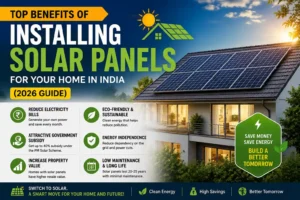

Top Benefits of Installing Solar Panels for Your Home in India (2026 Guide)
- Home
- Home 1
- Blog Standard
- Blog
- Top Benefits of Installing Solar Panels for Your Home in India (2026 Guide)
There has been an increase in the consumption of electricity among Indians’ domestic consumption over the past few years. This is due to the introduction of new technologies such as air conditioning, refrigeration, advanced smart appliances, electric vehicle chargers, home office equipment, and many other innovations.
For instance, a family might opt to use solar panels because it could be more convenient for them in managing expenses. This implies that more families are adopting solar panel installation in their homes. This trend means that using solar power at home is not only possible but it has become common. Various reasons have encouraged people to adopt solar power within their homes.
In this blog, we will discuss the advantages of solar panels, how much money people can save from using solar panels, and why 2026 would be one of the most appropriate times to install solar panels.
What Is a Solar Solution for Home?
A home solar solution refers to a residential rooftop solar system, which captures energy from the sun in order to provide electricity for homes. It includes solar panels, an inverter, a mounting structure, a net meter, and battery storage, depending on individual needs.
The mechanism of a residential solar system involves the generation of power via the PV panels mounted on the roof of a home. The electricity is generated in DC form and converted to AC electricity by means of the inverter.
The basic components of a solar system for homes include:
- Solar Panels
- Solar Inverter
- Mounting Structure
- Net Meter
- Battery Storage (Optional)
When there is an excess of energy generated during the day, the homeowner will be able to sell the energy to the utility company, thus earning additional credits and saving money on electricity.
Why Are More Indian Homeowners Switching to Solar Energy?
The usage of solar panels by homeowners has risen sharply over the last few years. There are several reasons behind this rising trend.
Increasing Electricity Prices
The price of electricity keeps increasing in several states in India. For those homes that consume a large amount of power, electricity bills turn out to be a burden.
Solar rooftop systems help reduce dependency on the electricity department and safeguard against future tariff hikes.
Government Incentives
Incentive schemes introduced by the government like the PM Surya Ghar Muft Bijli Yojana, make it cheaper to install solar panels at home.
Government incentives lower the cost of installation, making them more affordable and fast-tracking the payback period.
Technological Innovations in Solar Energy
Current solar panel systems have better efficiency and durability compared to their counterparts.
Current technologies provide:
- High energy production
- Improved performance in poor lighting conditions
- Improved heat resistance
- Increased durability
Top-of-the-range solar panels produce electricity efficiently for over 25 years.
Quicker Return on Investment
Due to lower installation costs coupled with rising electricity prices, solar panels now provide quicker returns on investment.
Residential consumers see their initial investment paid back in as short a period as 4 to 6 years, after which they will save money for years to come.
Environmental Consciousness
Customers are becoming environmentally aware. Through solar power use, customers not only help cut down on carbon emissions but also help India make its move towards renewable energy.
Top 10 Benefits of Installing Solar Panels for Your Home
Significant Reduction in Electricity Bills
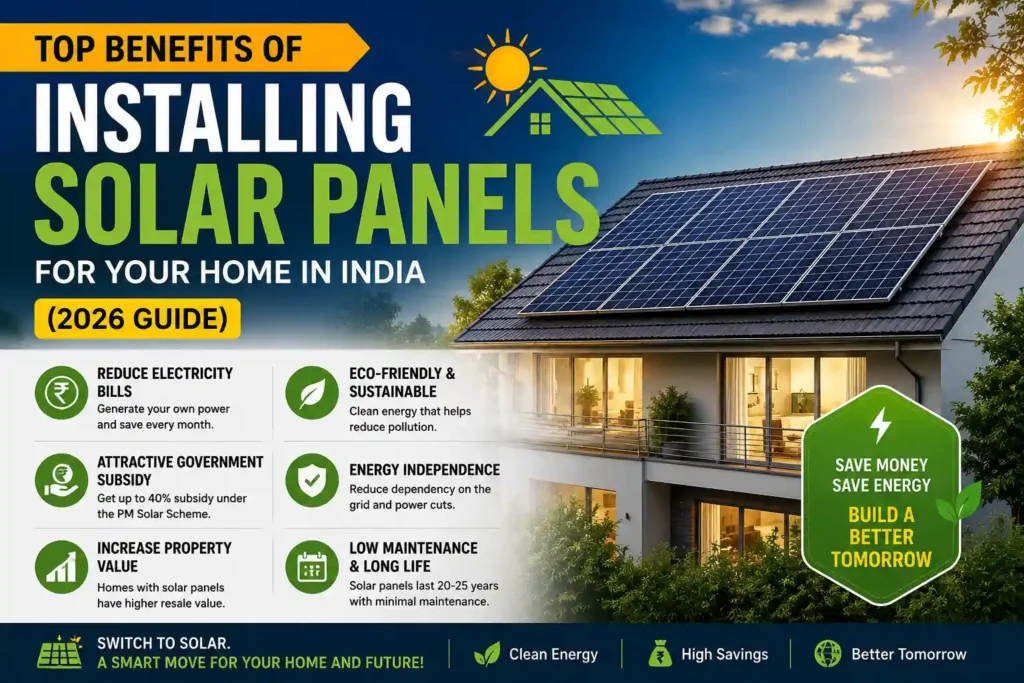
The cost of electricity can be lowered by solar panels by up to 50%-90%, according to the type of system used and how much power the household uses. The most common reason that makes people install solar panels is the chance of cutting down their monthly electricity costs.
When solar panels produce electricity throughout the day, a family uses less electricity from the power grid, thus reducing their utility costs.
Depending on:
- Size of solar system
- Power consumed
- Location of home
- Advantages of net metering
- Utility charges
Over the lifespan of the system, these savings can amount to several lakhs of rupees.
Government Subsidies and Incentives
There has been remarkable improvement in the affordability of residential solar systems owing to government incentives.
Homeowners who fall within the qualifying criteria can avail themselves of subsidies that help cut down on initial costs.
Initiatives like PM Surya Ghar Yojana have helped thousands of people install solar systems despite the initial investment involved.
Subsidies usually lead to the following advantages:
- Decreased installation costs
- Shorter payback periods
- Better returns on investment
- Higher affordability
Many people find that because of government assistance, installing solar becomes economically feasible right from the beginning.
Protection Against Rising Electricity Costs
Tariffs for electricity never tend to decrease over time. The higher rates that utilities charge make homeowners more susceptible to an increase in the cost of electricity.
Solar panels installed at the residence serve as protection against rising tariffs. Rather than being fully dependent on grid electricity, the homeowner can produce his own electricity, thus avoiding future increases in its price.
Excellent Return on Investment (ROI)
While most home products lose their value with age, the benefits of solar panels only continue to increase each year.
Key features of rooftop solar panels include the following:
- Last for 25+ years
- Continuous cost savings
- Low maintenance costs
- Stable financial gains
For many homeowners, solar is one of the most attractive long-term investments available.
Energy Independence
Energy Independence is one of the underrated aspects of using solar energy. It can be generated at home, which helps in reducing dependency on power suppliers and enables people to have better control over their electricity bills.
The following are some of the benefits that come along with energy independence:
- Reduces dependency on the grid system
- More control over electricity prices
- Better energy security
- Shield from future tariff hikes
Eco-Friendly and Sustainable Energy
Solar energy provides clean electricity and helps consumers lower their carbon footprints and contribute towards sustainability.
As opposed to conventional electricity, which relies on fossil fuel energy sources, solar energy is clean and does not emit any pollutants. With every watt produced by solar panels, there is a reduction in the use of energy from fossil fuels and cleaner air.
Solar energy environmental benefits include:
- Low carbon emission
- Decreased dependence on fossil fuels
- Clean air
- Encouragement of renewable energy usage
- Sustainability of the power supply
An average solar panel system installed at home is capable of saving many tons of CO2 emissions during its lifecycle.
Low Maintenance Requirements
One of the factors behind the popularity of rooftop solar energy systems is their simplicity.
Contemporary solar panel technology does not have any moving parts, which translates to fewer elements that are likely to get worn out or require regular maintenance.
Owners usually have to:
- Keep panels clean
- Check system performance
- Carry out routine inspections
Solar panels often feature extensive guarantees on product and performance, which provides owners with extra confidence.
Considering the financial savings they offer, maintenance expenses are negligible.
Increases Property Value
Energy-efficient housing is becoming more popular in the current real estate market.
A house that is provided with a solar roof system can provide several advantages that make it more appealing for buyers. These advantages include the following:
- Better appeal to buyers
- Lower utility bills on a monthly basis
- Advanced energy system
- Ability to save money in the long run
With growing awareness about renewable energy sources, houses that have solar roofs might become more desirable.
Net Metering Advantages
Net metering permits the homeowner to sell additional electricity produced by his or her solar system back to the electric company through net metering and save for future electricity expenses.
Net metering happens to be one of the most rewarding aspects of a residential solar energy system. Solar panels produce extra electricity when weather conditions are favorable, and not all the electricity is utilized by the home. This electricity is fed back into the power grid.
This will enable:
- Savings on the electricity bill
- Better utilization of solar energy production
- Higher ROI
- Faster payback period
For many homeowners, net metering significantly increases the financial value of a rooftop solar installation.
Reliable Long-Term Power Generation
Solar technology in today’s time is meant to be sustainable. Quality solar panels usually produce power effectively for about 25 years or even longer, making them some of the most durable home improvement options available.
Some of the features offered by modern solar systems include:
- Increased efficiency
- Weather resistance
- Durability
- Energy generation
The installation of a solar energy system in your house will last you for many years ahead.
How Much Can a Homeowner Save With Solar Panels?
From 50% up to 90% can be saved on electricity bills depending on electricity usage and system size once solar panels have been installed.
These depend on:
- Electricity usage per month
- Size of the solar panel system
- Geography
- Tariffs by utility companies
- Benefits of net metering
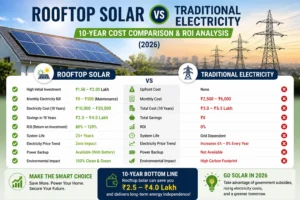
The following table gives a general idea.
Is Solar Worth It for Indian Homes?
In most cases, for homeowners, the answer would be affirmative.
Rooftop solar power generation has several advantages, especially from the financial point of view, because of increasing electricity prices, government incentives, and more efficient technology. Now it is considered not only a sustainable choice but also a lucrative one.
Common Myths About Residential Solar Systems
Even with the rise of solar energy as a preferred source of power, some misconceptions still deter homeowners.
Solar Panels Aren’t Efficient in Cloudy Weather
Solar panels continue functioning despite cloudiness, albeit producing less power than when the weather is clear.
Solar Panels Need Regular Maintenance
Modern solar systems need minimal maintenance, and occasionally cleaning the system is enough.
Solar Energy Is Still Very Expensive
Subsidies by the government and reduced prices of installing solar panels have brought down their cost significantly from what they were in the previous years.
Roofs Can Be Damaged by Solar Panels
The solar systems are professionally installed in such a way that the roof isn’t affected.
Solar Panels Are for Big Houses
It doesn’t matter how big your house is because there are solar panels suitable for houses of any size.
How to Choose the Right Solar Solution for Home
Choosing an appropriate solar power system involves various criteria.
Based on the Consumption of Electricity Per Month
The amount of electricity consumed each month is one of the critical aspects in determining the size of the system.
Based on Space Available on Roof
The roof space determines the number of solar panels to be mounted.
Based on Budget Consideration
Homeowners need to consider budget when purchasing a solar power system.
Based on Energy Needs in the Future
Energy needs such as the purchase of new equipment must be considered.
Based on Subsidies Available
Subsidies can play an important role in making the final choice.
A professional site assessment can help determine the most suitable solar solution for your home.
Is 2026 the Right Time to Install Solar Panels?
Many homeowners will find that 2026 is a great year to make investments in roof-mounted solar systems.
- Current Government Subsidies: The government continues to incentivize people to install roof-mounted solar energy.
- Rising Tariffs on Electricity: The price of electricity keeps rising and is likely to continue doing so.
- Advancement in Solar Technology: Solar panels have become more effective at producing energy.
- Better Financing Plans: People have access to new methods for paying for a solar panel installation.
Delaying solar installations means losing money due to higher electricity costs. However, getting roof-mounted solar panels now enables one to save money immediately.
Why Consider Brightleaf Energy to Install Solar Panels in Your Home?
Just like picking the best solar system, it is vital to pick a good solar panel installer. Getting the services of such a company guarantees one the best results.
At Brightleaf Energy, we offer residents tailored residential solar panel solutions based on their current and future energy needs.
Tailored Solar Solutions
Each household requires customized electricity consumption analysis so that we can recommend a solar solution that will bring you maximum savings and ROI.
Government Standard Solutions
At Solar Panel Installation Services, we provide rooftop solutions that adhere to MNRE standards to help households remain eligible for solar subsidies.
Subsidies Guidance
Getting solar subsidies involves several steps. We make sure that homeowners fully understand the requirements for qualifying for such government incentives.
Professional System Installation
Installation is one of our core areas. At Solar Panel Installation Services, we provide professional installation services of solar systems to our customers.
Trusted Solar Products
In cooperation with trusted solar manufacturers, we offer high-quality solar panels that come with product warranty for your peace of mind.
Aftercare Services
Customer satisfaction is important at Solar Panel Installation Services. For this reason, we offer maintenance services after our customers buy solar panels.
Check Solar Eligibility | Calculate Savings | Book Site Visit | Get Free Quote
Frequently Asked Questions (FAQs)
What is the biggest benefit of installing solar panels at home?
The greatest advantage is that the electricity bill will be greatly reduced. Depending on the size of the system installed, a homeowner could save 50-90 percent of the money they spend on electricity while making energy that is clean.
How much can I save with a residential solar system?
The savings will depend on the amount of electricity consumed, the size of the solar power system, and tariffs that apply locally. Many homeowners save several thousands of rupees each year.
Is solar energy suitable for all homes in India?
The majority of houses that have enough rooftop space and exposure to sufficient sunlight can harness the benefits of solar power. Site assessments will determine whether your house qualifies.
How long do solar panels last?
Quality solar panels are known to last for more than 25 years without compromising on power generation efficiency.
Do solar panels work during monsoon season?
Yes. While clouds and rainfall reduce energy production, solar panels are still able to produce electricity even during the monsoons.
What maintenance do solar panels require?
Solar panels are very durable and require little maintenance, just regular cleaning and inspection for optimum performance.
Can solar panels increase property value?
Yes. Buyers prefer energy-efficient houses with rooftop solar panels since they come at a reduced cost and have lower utility bills.
What is net metering?
Net metering is a concept whereby the excess electricity generated by the solar panels is fed into the electricity grid and the consumer gets credits for future electricity use.
Are government subsidies available for home solar systems?
Yes. There are various government schemes under which homeowners eligible for subsidies can obtain financial assistance from schemes like PM Surya Ghar Yojana.
How do I choose the right solar system size?
The right system size depends on your monthly electricity consumption, rooftop space, future power requirements, and budget. A professional solar assessment can help determine the ideal capacity.
Conclusion
Installation of solar panels is undoubtedly one of the best decisions that can be made by homeowners in 2026. In addition to the savings that can be enjoyed in terms of electricity bills, there are additional benefits, such as protection from increasing rates of utilities, subsidies, long-term profits, and increased independence.
The benefits go beyond mere financial considerations. Homeowners who decide to install solar panels will not only help to protect the environment but also become less dependent on traditional power resources. Thanks to modern solar panels that last for over 25 years, solar panels become an investment with high returns.
If you want to reduce your electricity bill or improve your home value, the best solution for you would be to use solar energy.
Ready to Switch to Solar?
Find out how much you could save with a personalized solar panel installation. Receive your free consultation and savings calculation now.
Table of Contents