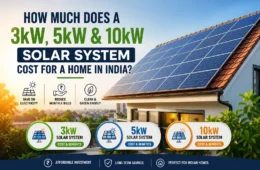

Complete Guide to Solar Panel Cost in India (2026 Updated Pricing)
What Is the Average Solar Panel Price in India in 2026?
Average installation costs for solar panels in India are estimated to be ₹60,000 to ₹70,000 per kW in 2026.
The increasing number of rooftop solar panel installations can be attributed to the escalating price of electricity, awareness about the use of renewable energy sources, and incentives from the government to go green.
Solar power generation is no longer considered an expensive process. In fact, it has become a feasible choice for residential, industrial, commercial, and institutional consumers to cut down their electricity bills.
Here at Brightleaf Energy, we offer comprehensive rooftop solar services through well-established brands like Tata Power Solar and Adani Solar.

Why Should You Invest in Solar Panels in India?
The installation of solar panels reduces the monthly bill of electricity bills and increases the independence in terms of energy.
Some of the advantages of solar energy are:
- Decreased cost of electricity bills
- Long-term savings
- Dependence on grid electricity decreased
- Benefits from government subsidies
- Energy production environmentally friendly
- High profitability
This guide will inform you about solar panel pricing, system sizing, subsidies, technology, installation cost, and other factors.
What Is Included in the Solar Panel Price in India?
Many people assume that solar panel pricing refers only to the cost of the panels. However, the total project cost includes several essential components.
A rooftop solar system typically includes:
- Solar panels or modules
- Solar inverter
- Mounting structure
- DC and AC wiring
- Safety devices
- Earthing system
- Net metering setup
- Installation and commissioning charges
The final cost depends on the overall system configuration and the quality of components used.
How Is Solar System Pricing Calculated?
The pricing of solar systems in India is often done taking into account the power capacity of the system, measured in kilowatt (kW).
For instance, a solar system of 3 kW will cost thrice as much as a solar system of 1 kW since the former needs to have three times the number of panels and bigger inverters.
The usual price of installing rooftop solar systems for homes is between ₹60,000 and ₹70,000 per kW.
How Much Do Solar Panels Cost in India in 2026?
The cost of a solar system varies depending on its size and energy generation capacity.
1 kW Solar System Price
A 1 kW rooftop solar system costs approximately ₹60,000 to ₹70,000.
It is suitable for:
- Small homes
- Basic household appliances
- Fans, lights, TVs, and refrigerators
2 kW Solar System Price
A 2 kW solar system typically costs between ₹1.2 lakh and ₹1.4 lakh.
It is ideal for households with moderate electricity consumption.
3 kW Solar System Price
A 3 kW solar system costs approximately ₹1.8 lakh to ₹2.1 lakh before subsidies.
This is one of the most popular choices for Indian households and can support:
- Air conditioners
- Washing machines
- Refrigerators
- Daily household appliances
5 kW Solar System Price
A 5 kW solar system generally costs between ₹3 lakh and ₹3.5 lakh.
It is suitable for:
- Large homes
- Villas
- High electricity consumption households
10 kW Solar System Price
A 10 kW rooftop solar system costs approximately ₹6 lakh to ₹7 lakh.
It is commonly used for:
- Commercial buildings
- Offices
- Factories
- Industrial applications
What Factors Affect Solar Panel Prices in India?
Several factors influence the total cost of a rooftop solar system.
The most important factors include:
- Solar panel brand
- Panel technology
- System size
- Inverter type
- Roof structure
- Installation complexity
- Government subsidies
How Does Solar Panel Brand Affect Pricing?
The brand of solar panels plays a major role in determining the total system cost.
Premium brands generally offer:
- Higher efficiency
- Better performance
- Longer warranties
- Greater durability
Brightleaf Energy works with trusted manufacturers such as Tata Power Solar and Adani Solar to deliver reliable rooftop solar solutions.
Tata Power Solar
Tata Power Solar is known for:
- Proven reliability
- Long-lasting performance
- Strong after-sales support
- Residential solar expertise
Adani Solar
Adani Solar has gained popularity because of:
- Advanced manufacturing capabilities
- High-efficiency solar modules
- TOPCon technology
- Competitive pricing
The right choice depends on your budget, energy requirements, and long-term expectations.
How Long Do Solar Panels Last?
Modern solar panels are designed to operate efficiently for 25 years or more.
Even after two decades of operation, premium solar panels can continue generating electricity at a high percentage of their original capacity.
Benefits of long-lasting solar panels include:
- Lower lifetime electricity costs
- Better return on investment
- Long-term energy savings
- Reduced dependence on conventional power
This is one of the key reasons why solar energy is considered a long-term financial investment rather than just an expense-saving solution.
Which Solar Panel Technology Is Best in 2026?
Solar panel technology affects both system efficiency and pricing.
Monocrystalline Solar Panels
Monocrystalline panels offer:
- Higher efficiency
- Better low-light performance
- More energy generation per square foot
These panels are ideal for homes with limited roof space.
Polycrystalline Solar Panels
Polycrystalline panels are known for:
- Lower upfront cost
- Reliable performance
- Suitable for larger rooftops
TOPCon Solar Panels
TOPCon technology is becoming increasingly popular in India because it provides:
- Higher efficiency
- Better heat resistance
- Improved long-term performance
- Greater energy output
Although advanced technologies may cost more initially, they often generate higher energy savings over the lifespan of the system.
How Does the Inverter Affect Solar Panel Costs?
The inverter is perhaps the most vital part of any solar energy generation system. This component changes direct current electricity produced by solar panels to an alternating current which is useful in running household or commercial equipment.
The choice of the inverter influences the effectiveness of the entire system.
String Inverters
String inverters are the most widely employed technology for rooftop solar systems.
Advantages of string inverters:
- Installation cost is low
- Efficient performance
- Applicable to conventional rooftops
- Easy to maintain
Microinverters
Microinverters are connected directly to each solar panel, enabling each panel to function independently.
Advantages of microinverters:
- Good performance under shading conditions
- Increased energy output
- Improved system monitoring
They are usually more costly than string inverters.
Hybrid Inverters
Hybrid inverters provide the capability to integrate solar generation along with battery storage facilities.
They are suitable for:
- Frequent power cuts regions
- Self-sufficient energy households
- Future incorporation of batteries
Being an advanced type of inverter, hybrid inverters are usually more costly.
Does Roof Structure Affect Solar Panel Installation Costs?
Yes, the type and condition of your roof play a very important role in the cost of installing a solar energy system.
Some roofs make solar installation easy and inexpensive, while some roofs need more work than others for installation.
Cost considerations involved in the installation process include:
- Roof type
- Roof height
- Roof accessibility
- Shadow analysis
- Structural strength
- Mounting requirements
RCC Roofs
RCC roofs are generally the easiest and most cost-effective for solar panel installation.
Tin Shed Roofs
Tin shed roofs may require additional mounting structures and design considerations, which can increase installation costs.
A professional site inspection is essential to determine the most suitable installation approach and accurate project pricing.
Is Government Subsidy Available for Solar Panels in India?
Yes. The Indian government continues to promote rooftop solar adoption through various subsidy programs for residential consumers.
Government subsidies help reduce the upfront cost of solar installations, making rooftop solar more affordable for homeowners.
Benefits of Solar Subsidies
- Lower initial investment
- Faster payback period
- Improved return on investment
- Increased accessibility to solar energy
The subsidy amount depends on:
- System size
- Government policies
- Eligibility criteria
- Approved installation partners
While commercial projects may not receive direct subsidies, they can often benefit from tax advantages and accelerated depreciation benefits.
How Do You Calculate the Right Solar System Size for Your Home?
Choosing the right solar system size is essential for maximizing savings and achieving the best return on investment.
Your ideal system size depends primarily on your monthly electricity consumption.
Recommended Solar System Size Based on Monthly Usage
| Monthly Electricity Consumption | Recommended System Size |
|---|---|
| 250-300 units | 2 kW |
| 400-500 units | 3-5 kW |
| Above 500 units | 5 kW or higher |
Installing a larger system than required may increase costs unnecessarily, while choosing a smaller system may not meet your energy needs.
A professional energy assessment helps determine the most suitable solar capacity for your property.
Does Solar Panel Pricing Vary Across Indian Cities?
Solar panel prices remain fairly consistent across India, with average installation costs ranging from ₹60,000 to ₹70,000 per kW.
However, slight price variations may occur due to:
- Local installation costs
- Transportation expenses
- Availability of installers
- Municipal approval requirements
Cities with high solar adoption include:
- Delhi
- Mumbai
- Bengaluru
- Hyderabad
- Pune
- Ahmedabad
While installation costs may vary slightly, long-term solar performance depends more on sunlight availability and system quality than on location alone.
Why Is Solar Panel Efficiency More Important Than Initial Cost?
Many buyers focus only on the upfront installation cost when comparing solar systems. However, efficiency often has a greater impact on long-term savings.
Solar panel efficiency refers to how effectively a panel converts sunlight into usable electricity.
Benefits of High-Efficiency Solar Panels
- Higher electricity generation
- Better use of rooftop space
- Faster return on investment
- Greater lifetime savings
This is especially important for homeowners with limited roof space.
Monocrystalline and TOPCon solar panels offered by Tata Power Solar and Adani Solar are known for their high efficiency and strong performance in Indian weather conditions.
Why Is Tata Power Solar a Trusted Choice?
Tata Power Solar is one of India’s most established solar panel manufacturers and is widely trusted for quality, durability, and customer support.
Key Benefits of Tata Power Solar Panels
- Proven long-term reliability
- Strong after-sales service
- High-quality manufacturing
- Excellent residential performance
Tata Solar Panel Price in India
Approximate pricing in 2026:
- 1 kW system: ₹65,000–₹75,000
- 3 kW system: ₹2 lakh–₹2.3 lakh
Many homeowners choose Tata Solar because of its reputation for long-term performance and dependable support.
Why Are Adani Solar Panels Becoming Popular?
Adani Solar has emerged as one of India’s fastest-growing solar panel manufacturers, driven by advanced technology and large-scale production capabilities.
Benefits of Adani Solar Panels
- Competitive pricing
- High-efficiency modules
- Advanced TOPCon technology
- Strong performance in residential and commercial projects
Adani Solar Panel Price in India
Approximate pricing in 2026:
- 1 kW system: ₹60,000–₹68,000
- 5 kW system: ₹3 lakh–₹3.4 lakh
Adani Solar is often preferred by buyers looking for high efficiency and modern solar technology at competitive prices.
Its strong energy output and scalability have also made it a popular choice for industrial and commercial installations.
Tata Solar vs Adani Solar: Which Is Better?
Choosing between Tata Solar and Adani Solar depends on your budget, energy requirements, and long-term goals. Both brands offer reliable solar panels, strong warranties, and proven performance.
Choose Tata Solar If You Want:
- A trusted and established brand
- Excellent after-sales support
- Long-term reliability
- Extensive service coverage across India
Tata Solar panels are ideal for homeowners who prioritize durability and dependable performance.
Choose Adani Solar If You Want:
- Advanced solar technology
- High-efficiency panels
- Competitive pricing
- TOPCon-based solutions
Adani Solar is a strong choice for buyers seeking maximum efficiency and modern solar technology at an affordable price.
Tata Solar vs Adani Solar Comparison
| Feature | Tata Solar | Adani Solar |
|---|---|---|
| Brand Reputation | Excellent | Excellent |
| Technology | Proven and Reliable | Advanced TOPcon |
| Efficiency | High | Very High |
| Service Type | Extensive | Growing rapidly |
| Pricing | Premium | Competitive |
| Best for | Long term reliability | High efficiency |
Both brands are among India’s leading solar manufacturers and offer excellent value for residential and commercial projects.
Which Type of Solar System Is Best: On-Grid, Off-Grid, or Hybrid?
The type of solar system you choose affects both installation costs and system functionality.
What Is an On-Grid Solar System?
An on-grid solar system is directly connected to the electricity grid.
Benefits include:
- Lowest installation cost
- No battery requirement
- Higher return on investment
- Ideal for urban homes and businesses
On-grid systems are the most common rooftop solar installations in India.
What Is an Off-Grid Solar System?
An off-grid solar system operates independently without relying on the electricity grid.
Benefits include:
- Complete energy independence
- Reliable power in remote areas
- Suitable for locations without grid access
Since batteries are required for energy storage, off-grid systems are generally more expensive.
What Is a Hybrid Solar System?
A hybrid solar system combines the benefits of both on-grid and off-grid systems.
Benefits include:
- Grid connectivity
- Battery backup support
- Protection during power cuts
- Greater energy flexibility
Although hybrid systems cost more, they provide enhanced energy security and convenience.
How Much Can Solar Panels Reduce Electricity Bills?
One of the biggest advantages of rooftop solar is long-term savings on electricity bills.
A properly sized solar system can reduce monthly electricity costs by 80% to 90%, depending on energy consumption and system capacity.
Example of Solar Savings
If a household spends ₹5,000 per month on electricity:
- Annual electricity expense = ₹60,000
- Solar investment payback period = Approximately 4 to 6 years
Since solar panels typically last over 25 years, homeowners can continue generating low-cost electricity for decades after recovering their investment.
Businesses often achieve even faster payback periods due to higher electricity consumption and rising commercial power tariffs.
What Is the Maintenance Cost of Solar Panels in India?
Solar panels require very little maintenance compared to other energy systems.
Routine cleaning is usually enough to maintain optimal performance.
Typical Solar Maintenance Requirements
- Clean panels every 1–2 weeks in dusty areas
- Remove leaves, dirt, and debris
- Periodically inspect wiring and mounting structures
- Schedule professional inspections when needed
Why Solar Maintenance Costs Are Low
- No moving parts
- Long panel lifespan
- Durable system components
- Minimal servicing requirements
As a result, maintenance expenses remain significantly lower than long-term electricity costs.
What Is Net Metering and How Does It Increase Savings?
Net metering is a billing mechanism that allows solar system owners to send excess electricity back to the grid.
When your solar system generates more power than you consume, the extra units are exported and credited to your electricity account.
Benefits of Net Metering
- Reduces electricity bills further
- Improves return on investment
- Maximizes solar energy utilization
- Earns credits for excess power generation
Although net metering regulations vary by state, it remains one of the most valuable financial benefits of on-grid solar systems in India.
Brightleaf Energy can assist homeowners and businesses with the net metering approval process.
Why Is Solar Demand Growing Rapidly in India?
India’s solar market continues to grow due to increasing electricity prices and stronger support for renewable energy.
Several factors are driving rooftop solar adoption:
- Rising electricity costs
- Government subsidy programs
- Improved solar technologies
- Growing environmental awareness
- Better return on investment
As solar systems become more affordable and efficient, they are increasingly viewed as a smart financial investment rather than just an environmentally friendly option.
Why Choose Brightleaf Energy for Solar Installation?
Choosing the right installation partner is just as important as selecting the right solar panels.
Brightleaf Energy provides complete rooftop solar solutions tailored to residential, commercial, and industrial requirements.
Our Services Include:
- Site inspection and consultation
- Customized solar system design
- Professional installation
- Net metering assistance
- Ongoing after-sales support
Why Customers Choose Brightleaf Energy
- Trusted solar brands
- Competitive pricing
- Expert installation team
- Focus on long-term performance
- End-to-end project management
We work with leading manufacturers such as Tata Power Solar and Adani Solar to deliver reliable and efficient solar solutions.
What Are the Future Trends in Solar Panel Pricing in India?
The Indian solar industry is evolving rapidly, making solar energy more accessible and cost-effective.
Several trends are expected to shape future solar panel prices:
- Increased domestic manufacturing
- Improved supply chain efficiency
- Growth of TOPCon technology
- Adoption of bifacial solar modules
- Advancements in energy storage systems
As technology continues to improve and production scales increase, consumers can expect better efficiency and greater value from solar investments.
Industry experts believe rooftop solar systems will become a standard feature in homes and commercial buildings across India in the coming years.
Conclusion
Solar energy is becoming more affordable, efficient, and accessible across India.
In 2026, rooftop solar installation costs typically range between ₹60,000 and ₹70,000 per kW, depending on the solar panel brand, inverter type, system size, and installation requirements.
Whether you choose Tata Solar for its proven reliability or Adani Solar for its advanced technology and efficiency, investing in solar energy can significantly reduce electricity bills and increase energy independence.
With the right system design and professional installation, solar power offers long-term savings while contributing to a cleaner and more sustainable future.
If you plan to install rooftop solar panels at home or work, Brightleaf Energy can assist you in selecting the perfect solar panel solutions with expert advice and installation.
Frequently Asked Questions About Solar Panel Price
What is the average cost of a solar panel in India in 2026?
On average, in India, the price of the solar panels falls between ₹60,000 to ₹70,000 per kW based on the brands, types, inverters used, and other installation needs.
Which brand of solar panels should I buy? Should I go for Tata or Adani?
Both companies manufacture premium solar panels. Tata Solar Panel is a reliable brand, whereas the company Adani is famous because of its innovative and competitive technology.
For how many years do solar panels work?
Usually, premium solar panels have the ability to generate power efficiently for over 25 years or even longer.
Does solar energy save all the money spent on electricity?
Based on system capacity, it is possible to lower your monthly electricity expenditure by up to 80%.
Is solar worth purchasing in 2026?
Considering high electricity prices, modern technology, and government subsidies, solar energy is still one of the best investments in India.